
Secrets To Impressive Coffee Catering for Business Meetings
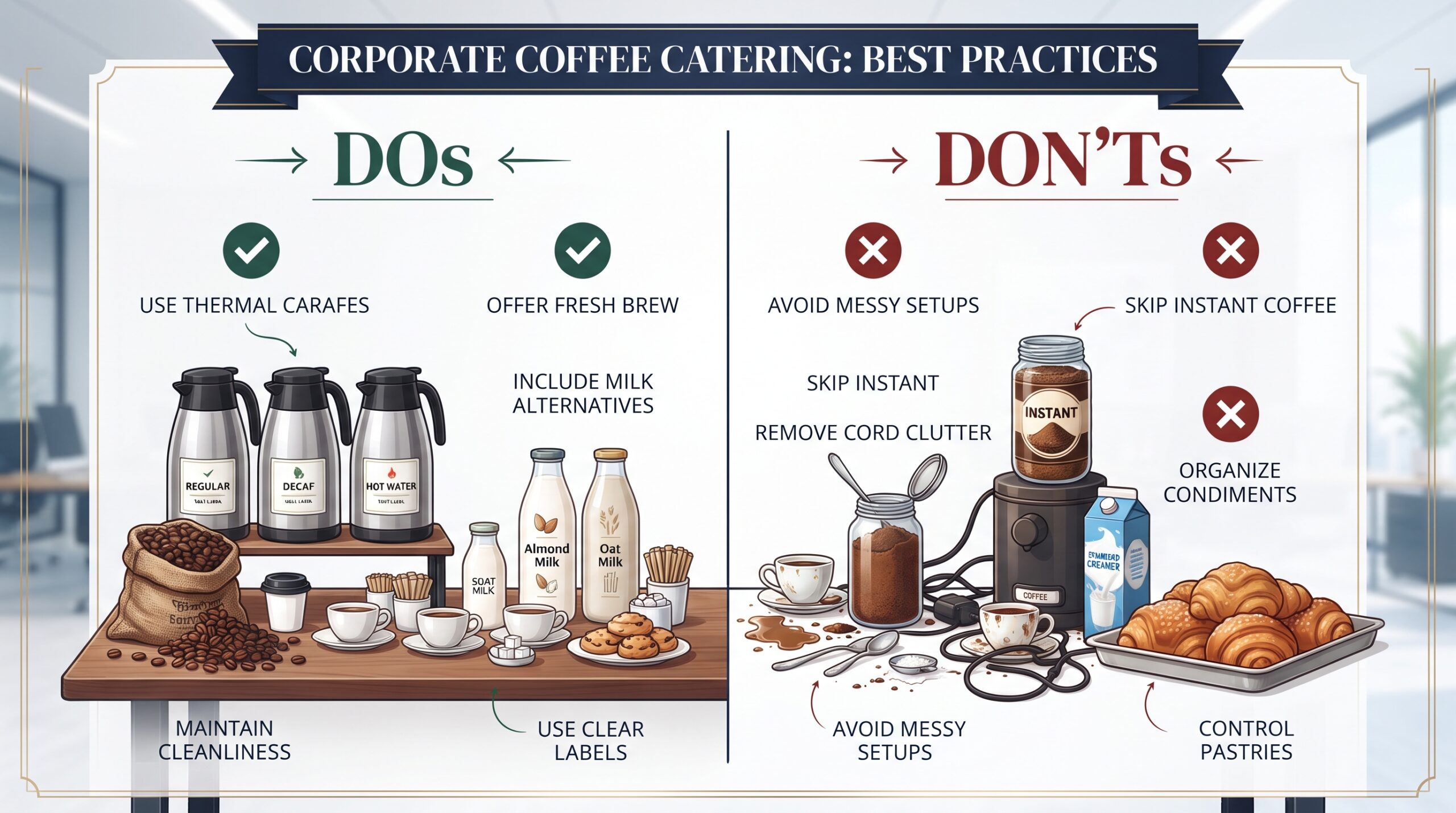
Coffee catering for business meetings works best when the drinks are fresh, the choices suit the attendees, and the serving area does not interrupt the meeting. Coffee quality, brewing method, serving temperature, milk alternatives, dietary requirements, and equipment should all be considered before guests arrive.
Whether you are organising a client presentation, team brainstorming session, or professional networking event, the coffee service can influence how comfortable and engaged attendees feel. A poorly arranged station can create queues, spills, missing dietary options, and repeated interruptions. A well-planned setup allows people to prepare their drinks quickly and return their attention to the meeting.
Businesses that need help arranging the drinks and serving setup can explore Pearl Lemon Catering’s coffee catering services.
Key Takeaways for Business Meeting Coffee Catering
The most important coffee catering decisions concern freshness, variety, temperature, dietary needs, and the practical layout of the serving area.
Ask about drink and milk preferences before the meeting.
Provide coffee, decaffeinated coffee, tea, and suitable alternatives.
Use recently roasted coffee beans and store them correctly.
Match the brewing method to the meeting size and format.
Keep hot drinks at a suitable serving temperature.
Clearly label dairy-free and dietary options.
Position the coffee station where it will not disrupt the meeting.
Avoid reheated, stale, or lukewarm coffee.
Keep cups, milk, sweeteners, and waste collection within easy reach.
9 Dos for Impressive Coffee Catering
The following nine practices can help create a smoother and more professional coffee experience during a business meeting.
1. Do Research Your Attendees’ Preferences
Ask about attendees’ drink preferences before deciding what to serve.
Some guests may prefer dark roasts, while others may choose lighter or milder coffee. There may also be attendees who drink only decaffeinated coffee, tea, or dairy-free alternatives.
For an internal meeting, a short email or message can help identify the most common preferences. For a client presentation or external event, ask the organiser whether dietary, allergy, or drink requirements have already been collected.
Morning meetings may also require the coffee service to be coordinated with breakfast items. Pearl Lemon Catering’s corporate breakfast meeting catering page provides further information for this type of event.
2. Do Offer More Than One Coffee Option
Provide enough variety for attendees to choose a drink that suits their taste.
A simple business meeting setup could include a balanced house coffee and a decaffeinated option. A broader coffee service may offer different roast profiles, strengths, origins, or preparation methods.
Single-origin coffee (coffee sourced from one growing region) can introduce distinctive flavour characteristics. Blends may provide a more familiar and consistent taste.
Avoid providing so many options that the station becomes difficult to understand. Clear labels can help guests make their choice quickly without asking for assistance.
3. Do Provide Alternative Hot Drinks
Include suitable alternatives for attendees who do not drink standard caffeinated coffee.
Useful options may include:
Decaffeinated coffee
Black tea
Herbal tea
Speciality tea
Hot water
Dairy milk
Soy milk
Almond milk
Oat milk
Coconut milk
Tea bags, coffee, hot water, milk, and sweeteners should be positioned in a logical order. Guests should not need to cross back through the queue to finish preparing their drinks.
If the meeting also includes food, review the wider Pearl Lemon Catering menus when planning the refreshment selection.
4. Do Use Recently Roasted Coffee Beans
Recently roasted beans usually provide better flavour and aroma than beans that have been stored for too long.
Coffee begins to lose freshness after roasting, particularly when it is exposed to air, heat, moisture, or light. Check the roast date where possible instead of relying only on an expiry date.
The beans should also suit the selected brewing method. Beans prepared for espresso may require a different roast profile and grind setting from beans used for filter coffee, French press coffee, or pour-over coffee.
Fresh beans will not compensate for poor brewing, but they provide a stronger foundation for a better cup.
5. Do Store Coffee Beans Correctly
Store coffee beans in an airtight container in a cool, dry, and dark location.
Coffee should not be left in an open bag near a window, kettle, oven, or other source of heat. Exposure to oxygen, moisture, heat, and light can affect the taste and aroma.
Avoid repeatedly opening a large container for small meetings if the beans will remain in storage for a long period. Dividing the coffee into smaller sealed containers can reduce unnecessary exposure.
Beans should usually be ground close to the time they are brewed. Ground coffee has a larger exposed surface area and can lose freshness more quickly.
6. Do Choose a Brewing Method That Suits the Meeting
The brewing method should match the number of guests, available time, venue, and type of service.
Pour-over coffee (coffee brewed manually through a filter) can provide greater control over flavour, but it may be too slow for a large group if each drink is prepared individually.
French press coffee (coffee steeped in hot water before being separated with a plunger) can work well for smaller groups and shared tables. Espresso-based drinks provide more choice but may require suitable equipment and someone to prepare each order.
For larger meetings, freshly brewed filter coffee held in insulated containers may allow attendees to serve themselves more efficiently.
When planning coffee catering for corporate events, consider:
The number of attendees
How quickly drinks need to be served
Whether guests will arrive at the same time
Whether the station will be self-service
The available power supply
Access to water
The amount of space available
Noise from grinders or coffee machines
7. Do Control the Water Temperature and Coffee Ratio
Use a consistent water temperature and coffee-to-water ratio for each batch.
Water that is too cool may produce weak or under-extracted coffee. Water that is too hot can contribute to harsh or bitter flavours, particularly if the coffee is left brewing for too long.
The appropriate coffee-to-water ratio depends on the brewing method, grind size, roast, and preferred strength. Use the same measurement process for each batch instead of estimating by sight.
Consistency is especially important when several batches are prepared during the same meeting. Guests should not receive noticeably different drinks depending on when they visit the station.
8. Do Use Clean and Presentable Equipment
Use clean coffee makers, grinders, containers, cups, and serving tools.
Old coffee residue and milk deposits can affect flavour, hygiene, and presentation. Equipment should be cleaned according to the manufacturer’s instructions, with particular attention paid to milk containers, steam wands, filters, and serving spouts.
The serving area should also remain organised. Keep used spoons, empty sachets, spills, and waste away from clean cups and ingredients.
A practical coffee station may include:
Coffee makers or insulated coffee containers
A grinder where freshly ground coffee is required
Cups and lids
Spoons or stirrers
Napkins
Milk and dairy-free alternatives
Sugar and sweeteners
Tea and hot water
A clearly labelled waste area
A tray or surface for used cups
9. Do Provide Useful Accompaniments
Provide the milk, sweeteners, and flavour choices guests are likely to use.
Standard accompaniments may include dairy milk, sugar, and a sugar-free sweetener. Depending on the attendees, it may also be appropriate to provide soy, almond, oat, or coconut milk.
Flavoured syrups and spices can be included when they suit the meeting, but the station should remain simple to use. Too many bottles, containers, and labels can make a small serving area feel cluttered.
If snacks or pastries are served, identify relevant allergens and position the food where it will not interfere with attendees preparing their drinks.
7 Don’ts to Avoid in Coffee Catering
The following seven mistakes can reduce the quality of the coffee and make the refreshment area harder to use.
1. Don’t Use Stale Coffee Beans
Do not use coffee beans that have lost their freshness and aroma.
Stale coffee can taste flat, dull, or unpleasant even when the brewing method is correct. Check how the beans have been stored, when they were roasted, and whether the packaging has remained properly sealed.
Avoid mixing older beans into a fresh batch simply to use them up. This can reduce the quality of the entire brew and create inconsistent results.
2. Don’t Store Coffee Carelessly
Do not leave coffee exposed to air, moisture, heat, or direct light.
Open packaging should be resealed properly or transferred into an airtight container. Coffee should not be stored near strong-smelling ingredients because it can absorb surrounding odours.
Avoid keeping beans in a warm cupboard above equipment that produces heat. Choose a stable, cool, and dry storage location instead.
3. Don’t Serve Reheated Coffee
Do not repeatedly reheat brewed coffee that has been left standing.
Reheating can create a burnt, bitter, or stale taste. It is usually better to prepare a fresh batch based on the number of people still expected to need a drink.
Smaller batches can reduce waste during longer meetings. Review attendance patterns and refresh the station when required instead of producing all the coffee at the beginning.
4. Don’t Serve Lukewarm Coffee
Do not allow hot coffee to remain in an open container until it becomes lukewarm.
A thermal carafe (an insulated container designed to retain heat) can help maintain the serving temperature without leaving coffee directly on a hot plate for an extended period.
Check the temperature and remaining volume during longer meetings. Replace old coffee with a fresh batch when necessary instead of topping up a nearly empty container with newly brewed coffee.
The water provided for tea should also remain hot enough for guests to prepare their drinks correctly.
5. Don’t Ignore Individual Preferences
Do not assume every attendee wants the same roast, strength, temperature, or milk.
Provide clear choices where practical, but avoid turning the coffee station into a complicated menu. Regular coffee, decaffeinated coffee, tea, and clearly labelled milk choices will cover many common requirements.
Hot water can allow guests to dilute a drink that is stronger than they prefer. However, the main batch should still be brewed consistently rather than intentionally prepared too strong.
6. Don’t Forget Dairy-Free Milk
Do not rely solely on dairy milk when attendees may require or prefer alternatives.
Soy, almond, oat, and coconut milk are among the options identified on the Pearl Lemon Catering page. The selection for a meeting should reflect the information provided by the attendees or organiser.
Keep each milk option clearly labelled. Separate containers can reduce confusion, particularly when allergies or dietary restrictions have been disclosed.
Avoid presenting a dairy-free option as suitable for a specific allergy unless its ingredients, handling, and possible cross-contact risks have been checked.
7. Don’t Ignore Dietary Restrictions and Allergens
Do not treat dietary requirements as an afterthought.
Coffee itself may be straightforward, but milk, syrups, sweeteners, pastries, biscuits, and other accompaniments can introduce allergens or ingredients that some attendees avoid.
Ask for relevant information before the meeting and label food and drink additions clearly.
Consider:
Dairy-free requirements
Gluten-free requirements
Sugar-free preferences
Nut allergies
Soy allergies
Ingredient sensitivities
Possible cross-contact
Where specialist dietary needs are involved, check product labels and handling arrangements carefully rather than making assumptions.
Business Meeting Coffee Station Checklist
A practical checklist can help confirm that the coffee station is complete before attendees arrive.
Drinks
Freshly brewed coffee
Decaffeinated coffee
Speciality teas
Hot water
Drinking water
Milk and Sweeteners
Dairy milk
Soy milk
Almond milk
Oat milk
Coconut milk
Sugar
Sugar-free sweetener
Equipment
Coffee maker or brewing equipment
Grinder where required
Thermal carafes
Kettle or hot-water equipment
Cups
Lids where required
Spoons or stirrers
Napkins
Serving trays
Practical Checks
Coffee beans stored correctly
Equipment cleaned before use
Drinks clearly labelled
Milk alternatives clearly labelled
Allergens identified
Power supply checked
Water access checked
Waste container provided
Spills cleaned promptly
Station positioned away from speakers and presentation equipment
Where Should the Coffee Station Be Positioned?
The coffee station should be easy to reach without creating noise or movement around the main meeting area.
Avoid placing grinders, kettles, or espresso equipment directly beside a speaker, presentation screen, video-call setup, or narrow doorway. Attendees preparing drinks should not block access to the seating area or repeatedly walk in front of the presenter.
For longer meetings, consider whether people will use the station during scheduled breaks or throughout the session. A self-service station may work well outside the main room, while a smaller setup inside the room may be suitable when noise and movement can be controlled.
Keep electrical cables secured and avoid positioning hot-water equipment where it could be knocked over.
How Much Coffee Should You Prepare?
The amount of coffee required depends on the guest count, meeting duration, time of day, and availability of other drinks.
Some attendees may drink more than one cup, while others may choose tea, water, or no hot drink. Morning meetings may create stronger demand for coffee than meetings held later in the day.
Instead of preparing an excessive quantity at once, consider brewing manageable batches and checking demand during the meeting. This can reduce waste and prevent coffee from standing for too long.
For larger meetings, provide the catering team with:
The expected number of attendees
The meeting start and finish times
The planned break times
The number of coffee stations
Whether the service is self-service or attended
The expected mix of coffee, tea, and decaffeinated drinks
Conclusion
Successful coffee catering for business meetings depends on preparation, freshness, variety, and a serving setup that supports the event rather than interrupting it.
Use recently roasted beans, choose a brewing method that suits the guest count, provide suitable milk and drink alternatives, and keep the station clean and clearly organised. Avoid stale beans, reheated coffee, lukewarm drinks, and unlabelled dietary options.
Businesses arranging meetings, presentations, and professional events in the capital can explore Pearl Lemon Catering’s business catering in London. Published service examples are also available on the Pearl Lemon Catering case studies page.
Frequently Asked Questions About Coffee Catering for Business Meetings
1. How much does coffee catering for a business meeting cost?
Pricing depends on the guest count, venue, drink selection, equipment, dietary requirements, and service format. Provide the meeting date, location, and expected attendance when requesting a quotation.
2. What drinks should be provided at a business meeting?
Business meetings should normally provide freshly brewed coffee, decaffeinated coffee, tea, hot water, and suitable milk choices. The final selection should reflect the attendees’ preferences and dietary requirements.
3. Should business meeting coffee include dairy-free milk?
Yes, dairy-free milk should be considered when attendees require or prefer alternatives to dairy. Options named on the page include soy, almond, oat, and coconut milk.
4. What coffee brewing method is best for a meeting?
The best brewing method depends on the number of guests, available time, venue, and service format. Filter coffee or thermal carafes may suit larger self-service meetings, while espresso, French press, or pour-over coffee may suit smaller groups.
5. How can coffee be kept hot during a meeting?
Coffee can be held in a clean thermal carafe designed to retain heat. Avoid repeatedly reheating coffee or leaving it exposed until it becomes lukewarm.
6. How far in advance should coffee catering be arranged?
Arrange coffee catering as early as possible once the date, venue, and expected guest count are known. Availability will depend on the event details and selected service format.
7. Can coffee catering include tea and decaffeinated drinks?
Yes, coffee catering can include speciality teas, hot water, and decaffeinated coffee. These options help accommodate attendees who avoid standard caffeinated coffee.
8. What equipment is needed for a business meeting coffee station?
The equipment may include a coffee maker, grinder, kettle, thermal carafes, cups, serving tools, napkins, and waste containers. The exact setup depends on the brewing method, venue, and number of guests.
9. Where should a coffee station be placed?
A coffee station should be easy to access without blocking entrances, presentation equipment, speakers, or seating. It should also have safe access to power and water where required.
10. Can the coffee selection be customised?
Yes, the coffee selection can be adjusted around roast profile, strength, origin, brewing method, caffeine preferences, milk choices, sweeteners, and flavour additions. The available choices should be agreed during the planning process.
Conclusion
Coffee catering for business meetings requires careful attention to detail and adherence to best practices. By following the dos and avoiding don’ts discussed in this article, you can ensure a successful coffee catering service and set yourself apart as a coffee caterer who prioritises quality, customer satisfaction, and attention to detail.
With each cup of coffee served, you can make a positive and lasting impression on business meeting participants, leaving them impressed and satisfied with your coffee catering service.
Was this article helpful? Let us know in the comments!