Planning a wedding in the UK has never been more financially significant, with catering consistently ranking among the top expenses. According to a 2024 survey by Hitched, the average UK wedding now costs £20,700, with catering taking a large share at £4,700 — around 23% of the total budget. Meanwhile, research from Bridebook shows food and drink are often the second or third largest cost category after venue hire.
This reflects a wider trend across the hospitality sector: catering costs in the UK have risen by 12% since 2022, largely due to food inflation and staffing pressures reported by the Office for National Statistics (ONS). Couples are responding with a mix of traditional sit-down meals and more casual options like food trucks and grazing tables, which influence per-guest pricing considerably.
This blog is designed for researchers, journalists, and wedding planners looking for up-to-date numbers, and location-specific insights. We’ll cover average spend, per-head costs, regional variations, catering types, menu trends, alcohol and drinks spending, inflation effects, and forecasts for 2025–2026.
Average Wedding Catering Spend in the UK (2023–2025)

Catering remains one of the most consistent and significant wedding expenses in the UK, with costs rising steadily over the past three years. As food inflation, labour shortages, and guest list expectations combine, couples are allocating a growing share of their budget to feeding and hosting guests.
National Averages and Per-Wedding Costs
According to Hitched’s 2024 National Wedding Survey, the average wedding catering bill in the UK was £4,680. Bridebook’s 2023 survey placed the figure slightly higher at £4,900, while smaller regional studies reported averages ranging between £3,800 and £5,200 depending on guest count and style of service.
In terms of percentage of the total wedding spend, catering accounts for 22–25% of the budget, making it one of the top three expense categories alongside venue hire and photography/videography.
| Year | Average Catering Spend | % of Wedding Budget |
| 2023 | £4,500 | 22% |
| 2024 | £4,680 | 23% |
| 2025 (forecast) | £4,950–£5,200 | 23–24% |
Per-Guest Spending Patterns
Catering spend is often calculated on a per-head basis, which makes it easier to compare across weddings of different sizes. Industry reports show the average cost per guest in the UK was:
- £70–£85 per guest in 2023
- £80–£95 per guest in 2024
- £90–£110 per guest forecast for 2025
This includes food service, wait staff, and basic drinks packages, but excludes premium extras like champagne toasts or cocktail bars.
Impact of Guest Numbers on Total Spend
Guest count is the single largest factor driving catering costs. According to Bridebook, the average UK wedding in 2024 hosted 81 guests, meaning that even at the lower range (£80 per guest), catering spend was around £6,480. Smaller weddings with fewer than 50 guests typically reported totals closer to £3,000–£3,500, while large-scale events with 150+ attendees frequently exceeded £12,000 in catering bills.
Regional Differences in Wedding Catering Spending Across the UK
Wedding catering costs in the UK vary widely depending on location. London and the South East tend to lead with the highest averages, while smaller towns and rural venues report lower per-head and total catering bills. These differences stem from food supplier costs, staffing rates, and the type of wedding venues available in each region.
London and the South East: The Highest Spenders
London weddings consistently rank among the most expensive in the UK. Hitched’s 2024 survey found that couples in London spent £5,700 on average for catering, which is around 20% higher than the national average. A typical per-head spend in the capital is £95–£120, reflecting higher staffing costs and premium menu options.
The South East follows closely, with averages ranging between £5,000 and £5,400, particularly in counties like Surrey and Kent where large country house venues are popular.
Northern England and Scotland: Lower but Rising Costs
Weddings in northern regions of England — including Manchester, Leeds, and Newcastle — tend to be more affordable, with catering spends averaging £3,800–£4,300. In Scotland, the average falls slightly lower at £3,700–£4,100, although luxury venues in Edinburgh and Glasgow push some figures higher.
Interestingly, Scotland also shows a sharper rise in per-head spending, moving from £65–£75 in 2022 to £80–£90 in 2024, driven by food inflation and rising demand for gourmet local produce.
Wales, Northern Ireland, and Rural Areas
Rural weddings in Wales and Northern Ireland tend to have lower guest counts and more community-based catering approaches, leading to smaller averages — typically £3,200–£3,800 per wedding.
That said, destination weddings in scenic rural areas, such as Snowdonia or the Antrim coast, often contract external caterers from major cities. These weddings can reach £5,000–£6,000 in catering costs, narrowing the gap with London averages.
Wedding Catering Types and Their Cost Impact

The style of catering chosen by couples in the UK has a direct impact on total spend. While the traditional plated three-course meal remains the most popular, alternative catering formats such as buffets, food trucks, and grazing tables are increasingly shaping budgets.
Plated Sit-Down Meals: The Classic Choice
Plated meals are still the gold standard for weddings, accounting for around 60% of catering choices in 2024 according to Bridebook. They are also the most expensive format, with per-head pricing ranging between £90–£120 depending on menu complexity. Costs rise due to:
- More staff required for table service
- Multiple courses (usually three)
- Higher demand for presentation and timing
For a wedding of 80 guests, a plated service typically costs between £7,200 and £9,600, not including drinks upgrades.
Buffet Service: Flexible but Not Always Cheaper
Buffets are often perceived as a budget-friendly alternative, but recent surveys show the cost gap has narrowed. The average buffet in the UK costs £65–£85 per head, compared with £90+ for plated meals. While staffing requirements are lower, caterers often offset this by offering larger portions and wider menu variety.
Grazing Tables and Sharing Platters
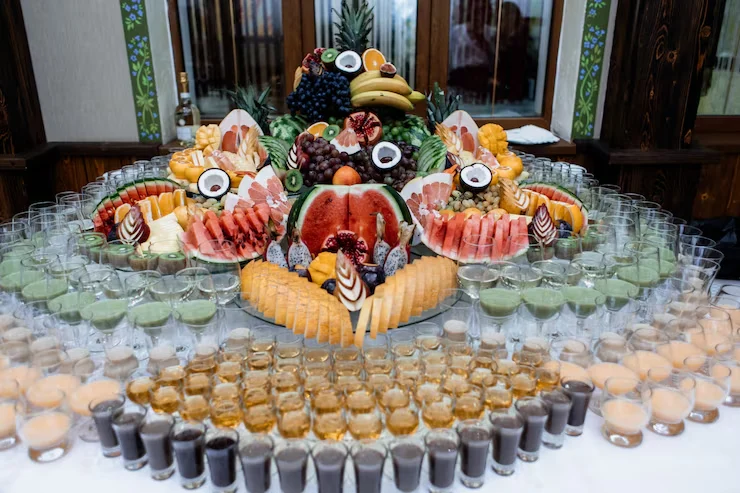
Grazing tables — which feature large displays of meats, cheeses, breads, and fruit — have grown in popularity, particularly for afternoon receptions. They typically range between £40–£60 per head, making them one of the more cost-effective options. However, they are often chosen as a supplement to evening food rather than a full replacement for a main meal.
Food Trucks and Street Food Vendors
Food trucks have expanded significantly in the UK wedding market, particularly for outdoor and festival-style weddings. A single truck can cost £1,000–£2,500 for service, translating into £10–£15 per guest for simple options (burgers, pizza, tacos) or £20–£35 per guest for gourmet street food. Couples often hire multiple vendors to cover main meal and late-night snacks, bringing totals closer to £4,000–£6,000 for 100+ guests.
Alcohol and Drinks Spending in UK Weddings

Drinks packages and bar services have become central to UK wedding budgets, often rivaling the food itself. From champagne toasts to signature cocktails, couples are dedicating a growing share of their catering spend to beverages.
Average Drinks Costs
In 2024, the average UK couple spent £2,800–£3,200 on drinks as part of their wedding catering package, according to Hitched. This typically includes:
- Arrival drinks (Prosecco, champagne, or cocktails)
- Half a bottle of wine per guest during the meal
- A glass of fizz for the toast
- Evening bar service (house spirits, beer, cider, mixers)
For comparison:
- 2023 average: £2,500–£2,700
- 2024 average: £2,800–£3,200
- 2025 forecast: £3,200–£3,600
Open Bar vs. Cash Bar
The decision between offering a full open bar or a cash bar dramatically affects totals:
- Open bar: Couples can spend anywhere from £4,500 to £7,000 depending on guest count, with costs climbing sharply if premium spirits or cocktails are included.
- Cash bar: Keeps spend lower, averaging £1,500–£2,000, as guests pay for most of their own drinks while couples cover essentials like the toast.
A hybrid model (part open bar for a few hours, then cash bar later) is now common, striking a balance between hospitality and budget control.
Champagne, Cocktails, and Extras
- Champagne toasts: £6–£10 per glass, averaging £480–£800 for 80 guests.
- Signature cocktails: £8–£12 per drink, often contracted via external mixologists.
- Specialty bars (gin, rum, whisky): Average £1,200–£2,000 depending on stock and service hours.
Rising alcohol duty in the UK has also added 6–8% to bar package prices since 2022, making drinks one of the fastest-growing elements of wedding catering bills.
The Impact of Inflation and Food Prices on Wedding Catering Spend
Rising food and drink prices have been one of the most influential factors behind wedding catering costs since 2022. UK couples are not only contending with higher supplier bills but also wage inflation in the hospitality sector, which increases the price of service-heavy catering formats such as plated meals.
Food Inflation and Its Effect on Catering
According to the Office for National Statistics (ONS), UK food and non-alcoholic drink inflation peaked at 19.2% in March 2023, the highest level since the 1970s. While inflation slowed to 8% by late 2024, the cumulative effect has raised the base cost of catering.
- Meat and poultry prices rose 14% between 2022 and 2024.
- Dairy products increased 17% in the same period, directly affecting desserts and cheese boards.
- Bread and cereals rose by 12%, impacting buffets and grazing tables.
These increases are passed directly to couples, with caterers typically revising packages annually.
Labour and Staffing Costs
The National Minimum Wage in the UK rose by 9.7% in April 2023 and 9.8% in April 2024, lifting hourly pay for hospitality staff. Since catering requires servers, bar staff, and chefs, these wage hikes significantly affect final invoices. A wedding requiring 10–15 staff for an all-day service can see staffing costs rise by £400–£700 compared with pre-2022 rates.
Forecast for 2025–2026
Industry forecasts suggest that catering costs will continue to grow, but at a slower pace:
- 2025 expected rise: 4–6% above 2024 averages.
- 2026 expected rise: 3–4% if inflation remains stable.
This means the average per-head catering cost could reach £95–£110 in 2025 and £100–£115 in 2026, cementing catering as one of the most inflation-sensitive areas of wedding planning.
Trends in Menu Choices and Dietary Preferences
UK wedding menus are evolving rapidly as couples cater to diverse dietary needs and food preferences. While classic three-course meals remain popular, growing demand for vegetarian, vegan, and allergen-friendly menus is reshaping catering packages — often with cost implications.
Rise of Plant-Based and Vegetarian Options
A 2024 YouGov survey found that 13% of UK adults identify as vegetarian or vegan, and nearly 25% describe themselves as flexitarian. This shift is reflected in wedding catering, where:
- Vegan menus typically cost 5–10% more than standard menus due to specialist ingredients and preparation.
- Vegetarian meals are often priced similarly to meat options but can save costs when paired with grazing tables or buffets.
- Couples are increasingly requesting plant-based canapés and late-night snacks, especially in urban centres like London, Manchester, and Bristol.
Allergen-Friendly Catering
With food allergies more common, caterers are expanding gluten-free, nut-free, and dairy-free menu choices. The UK Food Standards Agency reports that 1 in 10 adults has a food allergy or intolerance, and most wedding caterers now provide separate preparation zones to avoid cross-contamination.
While vital for guest safety, allergen-free options can raise costs due to specialist suppliers and additional staff training. Some caterers apply surcharges of £2–£5 per guest for menus with extensive dietary requirements.
Global Flavours and Cultural Influence
Couples are also moving towards culturally diverse menus:
- South Asian weddings: Often feature multi-course buffets with per-head spends ranging from £85–£130, reflecting the scale and variety of dishes.
- Mediterranean menus: Popular in summer weddings, costing £70–£90 per head with mezze-style service.
- Fusion menus: Combining British classics with global flavours, adding 10–15% to menu costs due to specialist chefs and ingredients.
Evening Food and Late-Night Catering Trends

Evening food has become a near-standard expectation at UK weddings, ensuring guests are well-fed long after the main meal. This secondary catering option can significantly add to the overall spend, especially when couples opt for specialty vendors or indulgent treats.
Average Spend on Evening Food
According to Bridebook’s 2024 survey, the average spend on evening food in UK weddings ranges between £1,200 and £1,800, depending on guest count and service style. For larger weddings (100+ guests), this figure often exceeds £2,500.
Most couples dedicate 10–15% of their total catering budget to evening food, making it the third-largest catering category after main meals and drinks.
Popular Evening Food Formats
Couples are moving away from traditional sandwich platters and embracing more creative and interactive food options. The most common include:
- Pizza vans: £8–£12 per guest, often totalling £1,200–£1,800 for 150 guests.
- Street food trucks: Burgers, tacos, fish & chips — £10–£20 per guest, depending on menu quality.
- Grazing boards and charcuterie: £6–£10 per guest, widely used for lighter evening snacking.
- Dessert stations: Doughnuts, waffles, ice cream — averaging £800–£1,200 for mid-sized weddings.
Regional and Seasonal Variations
- London & major cities: Couples lean towards gourmet late-night food trucks, often adding £2,000–£3,000 to the budget.
- Rural weddings: More likely to use in-house catering from the venue, with costs closer to £5–£8 per guest.
- Summer weddings: Ice cream vans and dessert carts are particularly popular, costing £700–£1,000.
The rise of late-night catering reflects a cultural shift — weddings are lasting longer into the night, and guests expect substantial food beyond the formal dinner service.
Wedding Catering and Guest Experience
Food and drink are often remembered as strongly as the ceremony itself. Surveys consistently show that catering spend directly influences guest satisfaction, which in turn affects how weddings are reviewed and remembered.
Catering as a Key Memory Factor
Hitched’s 2024 survey reported that 78% of guests ranked food and drink as one of the top three elements they recall from a wedding, alongside the venue and music. Poor catering experiences — such as long waits, limited portions, or low-quality menu items — were frequently cited in negative guest reviews.
Bridebook data also suggests that over 60% of couples increased their catering budget between 2022 and 2024 specifically to improve guest experience, even if it meant cutting costs elsewhere (e.g., flowers or favours).
Value Perception Among Guests
Guests often equate catering quality with the generosity of the couple, meaning that higher spend can translate to greater perceived hospitality. This doesn’t always mean extravagant menus — even modest catering, if well-presented and plentiful, scores highly.
Factors shaping guest satisfaction include:
- Speed of service (reducing wait times between courses)
- Portion sizes and variety
- Accommodation of dietary needs
- Drink availability during speeches and toasts
Social Media and Reviews
Food is also one of the most photographed aspects of weddings. Instagram and TikTok trends show that “wedding food moments” — such as champagne towers, dessert walls, or themed cocktails — have surged in popularity since 2023, with caterers tailoring packages to support shareable moments.
This visibility means catering spend has both immediate and lasting influence: not only does it satisfy guests on the day, but it also shapes how the wedding is perceived in digital memory.
Forecasts for UK Wedding Catering Spend (2025–2027)
Wedding catering costs in the UK are expected to continue rising, though not at the sharp levels seen during the 2022–2023 food inflation surge. Analysts predict moderate but steady growth, driven by evolving guest expectations, labour costs, and the continued popularity of premium food and drink options.
2025 Forecast
Industry forecasts suggest the average UK couple will spend between £4,950 and £5,200 on catering in 2025, excluding drinks and late-night food. On a per-guest basis, spend is likely to settle at £90–£110 depending on catering format.
Drinks and bar services are also expected to climb, with averages projected at £3,200–£3,600, partly due to increased alcohol duty.
2026 Projections
By 2026, catering spend is predicted to rise by 3–4%, reflecting stabilised but still higher-than-pre-pandemic prices. That places the average wedding catering bill at around £5,300–£5,500, with per-head pricing at £100–£115. Couples are expected to invest more in plant-based menus, dietary accommodations, and gourmet evening food options.
2027 Outlook
Looking further ahead, wedding market analysts expect catering spend to cross the £6,000 average mark by 2027 if inflation and wage pressures persist. This would cement catering as the second-largest wedding expense after venue hire.
Key market trends shaping this outlook include:
- Growth of hybrid catering models (formal plated meals combined with informal evening food).
- Continued rise of premium drink packages and specialty bars.
- Expansion of cultural and dietary-specific catering services, especially in multicultural urban centres.
Overall, while couples may face higher budgets, the emphasis on guest satisfaction and the central role of food in wedding memories suggests that catering spend will remain a priority, even under financial pressure.
Closing Thoughts on Wedding Catering Spending Statistics in the UK
Wedding catering in the UK has become more than just a practical consideration — it is now a central feature of the celebration, shaping both guest experience and overall wedding budgets. Between 2023 and 2025, average catering spend has risen steadily, with per-guest costs reaching new highs as food prices, staffing wages, and menu expectations evolve. Drinks and late-night catering have further expanded the financial commitment, often adding thousands of pounds to the total bill.
Looking ahead to 2026 and 2027, couples can expect catering to remain one of the top three wedding expenses, averaging between £5,500 and £6,000 per event. Despite rising costs, the continued prioritisation of guest satisfaction, diverse dietary needs, and memorable food experiences means catering will hold its position as one of the most valued investments in UK weddings.
Why Choose Pearl Lemon Catering for Wedding Catering in the UK
Pearl Lemon Catering understands that food is more than a wedding detail — it is an experience that defines the day for both couples and their guests. With expertise across traditional sit-down meals, buffets, street food, grazing tables, and fully managed drinks services, Pearl Lemon Catering delivers flexible packages designed to suit weddings of every size and style.
By combining the latest menu trends with careful planning, Pearl Lemon Catering ensures couples receive the best balance between quality and value. Whether you’re planning a London celebration, a countryside reception, or a destination wedding in Wales or Scotland, Pearl Lemon Catering works with you to provide memorable meals that fit your budget and reflect your vision.
Choosing Pearl Lemon Catering means working with a team that knows the UK wedding market inside out — from managing dietary preferences to offering evening food options that keep guests happy until the very last dance.
FAQs
1. What is the average wedding catering spend in the UK in 2025?
The average UK couple spends between £4,950 and £5,200 on catering in 2025, excluding drinks and evening food.
2. How much should I budget per guest for wedding catering in the UK?
Per-head catering costs in the UK typically range from £90 to £110 in 2025, depending on menu type and service style.
3. Does wedding catering cost more in London compared to other regions?
Yes, London averages are 15–20% higher, with per-guest costs often exceeding £120, compared to £90–£100 nationally.
4. What percentage of a wedding budget goes to catering?
Catering accounts for 22–25% of the total wedding budget, making it one of the top three expenses alongside the venue and photography.
5. How much do UK couples spend on wedding drinks?
In 2025, drinks packages and bar services typically cost £3,200–£3,600, depending on whether couples choose an open bar, cash bar, or hybrid approach.
6. Is buffet catering cheaper than a plated meal at UK weddings?
Buffets can be cheaper, averaging £65–£85 per guest, while plated meals range from £90–£120 per guest, but the savings are smaller than many expect.
7. What is the cost of evening food at UK weddings?
Evening food options cost £1,200–£1,800 on average, with pizza vans, grazing boards, and dessert stations among the most popular.
8. How do dietary preferences affect catering costs?
Vegan or specialist allergen-friendly menus can increase costs by 5–10%, as they often require premium ingredients and specialist preparation.
9. How are food prices and inflation affecting UK wedding catering?
Food and staffing inflation since 2022 have raised catering bills by over 12%, with per-head costs expected to keep rising in 2025–2027.
10. Why choose Pearl Lemon Catering for my UK wedding?
Pearl Lemon Catering combines menu variety, guest-focused service, and regional expertise to create catering packages that balance cost and quality across all UK locations.