Across the UK, event catering is moving into a new era shaped by sustainability concerns, rising food costs, and changing guest expectations. In 2023, the UK catering services market was valued at £5.8 billion and is projected to grow steadily through 2025, supported by corporate events, weddings, and large-scale cultural gatherings. Recent surveys also indicate that 61% of UK event planners prioritise sustainability in catering choices, while 46% of consumers prefer locally sourced menus when attending events.
These figures show the wider context—an industry balancing economic pressures with environmental and social responsibility. Event organisers must juggle rising food prices, shifting dietary requirements, and guest demand for experiences that feel modern yet thoughtful.
This blog is for researchers, hospitality professionals, and students examining the future of UK catering. It compiles recent data and industry insights, offering a structured overview of event catering preferences in 2025, with UK-specific trends across weddings, corporate functions, festivals, and private events.
Readers will find:
- Market overview and catering preferences shaping 2025.
- Insights into menu choices, sustainability, and dietary inclusivity.
- Regional highlights across major UK cities.
- A breakdown of sourcing practices, costs, and service formats.
Market Size and Growth of UK Event Catering in 2025
The UK catering sector has been regaining momentum since the pandemic, driven by weddings, corporate hospitality, and social events. As we enter 2025, the market is stabilising after a period of high food inflation and supply chain disruption.
Market Value and Forecast
- The UK catering services market was worth £5.8 billion in 2023, with annual growth expected at around 4–5% through 2025 (Statista, UKHospitality).
- Weddings continue to account for the largest share, representing nearly 42% of all event catering revenue in 2024.
- Corporate events, conferences, and business hospitality represent another 35% of the catering market, while festivals and cultural gatherings make up the rest.
This growth is supported by increasing event spend per guest, particularly in London, Manchester, and Edinburgh, where higher per-head catering budgets are becoming the norm.
Regional Growth Patterns
The catering market is not uniform across the UK:
- London: Remains the highest-value market, with average event catering spend of £120–£150 per head in 2024, especially in corporate hospitality.
- Manchester & Birmingham: Strong growth in weddings and cultural events, supported by the rise in multi-day celebrations with diverse catering requirements.
- Scotland (Edinburgh & Glasgow): Festival culture drives large-volume outdoor catering demand, with a focus on quick-service menus and street-food style dining.
- South West England (Cornwall, Devon, Bristol): Strong focus on locally sourced catering, particularly seafood and farm-to-table menus.
Event Formats Driving Spend
Different event types fuel growth in different ways:
- Weddings: Larger guest lists are back post-pandemic, with a rise in multi-course banquets and fusion cuisine.
- Corporate Events: Shift towards interactive catering (grazing tables, live cooking stations) to encourage networking.
- Festivals: Increasing emphasis on casual dining and local produce, with vegan and vegetarian options at the forefront.
Together, these formats explain why catering preferences are diversifying, as organisers aim to balance tradition with evolving dietary and cultural expectations.
Sustainability and Local Sourcing
Sustainability has moved from being a “nice-to-have” to a central decision factor in UK event catering. Guests and organisers alike are paying closer attention to where food comes from, how it’s served, and how much waste is generated.
Growing Demand for Responsible Catering
Recent industry research shows:
- 61% of UK event planners now list sustainability as their top priority when choosing caterers (Eventbrite UK, 2024).
- 46% of UK consumers prefer locally sourced menus at events, while 29% actively avoid events with excessive single-use plastics (Mintel 2023).
- DEFRA’s 2024 food report highlighted that the UK food service sector reduced carbon emissions by 12% since 2020, largely due to sourcing and packaging changes.
This shift reflects both corporate responsibility and guest preferences, especially among younger audiences who expect sustainable practices as a standard.
Local Sourcing Across UK Regions
Different parts of the UK are adopting distinct sourcing approaches:
- London & South East: Caterers highlight “food miles” reductions by working with regional farms, bakeries, and breweries.
- Scotland: Menus often feature local venison, salmon, and whisky, making provenance a selling point.
- South West England: Seafood-led catering and farm-to-table sourcing are dominant, tied closely to regional identity.
- Northern England: Emphasis on hearty, locally farmed produce, with a growing vegan and plant-based market.
This regionalisation not only reduces environmental impact but also allows events to showcase a “sense of place” through food.
Reducing Waste and Carbon Footprint
Caterers are also rethinking how they handle waste:
- Wider adoption of compostable packaging at festivals and outdoor events.
- Partnerships with charities to redistribute unused food.
- Smarter portion control and menu planning to cut leftovers.
At larger events, waste audits are becoming more common, ensuring organisers can track and improve their sustainability credentials year on year.
Dietary Inclusivity and Menu Trends
Dietary inclusivity is now a standard expectation across UK events, with organisers under pressure to provide menus that reflect a diverse mix of needs. From veganism to religious dietary rules, caterers are reshaping offerings to ensure no guest feels overlooked.
Rise of Plant-Based Catering
- 23% of UK consumers identified as flexitarian in 2024, prioritising plant-based meals at least part of the week (YouGov UK).
- At events, vegan and vegetarian options now account for 35–40% of menu requests, up from just 22% in 2019.
- Caterers report that plant-based menus are no longer “alternative” but integrated into mainstream event dining.
Popular plant-based event dishes include jackfruit sliders, beetroot carpaccio, and oat-based desserts, often paired with sustainable drinks such as kombucha and craft mocktails.
Religious and Cultural Dietary Needs
Events across the UK increasingly reflect multicultural Britain. Catering companies are adapting menus to meet these needs:
- Halal menus are a growing requirement, especially at weddings in London, Birmingham, and Manchester.
- Kosher catering remains strong in London and Leeds, often requiring specialised kitchens.
- South Asian-inspired fusion menus (such as Indian-Mexican street food) are rising in popularity, especially at weddings and festivals.
This inclusivity requires planning, as organisers must often accommodate multiple dietary rules within a single event.
Health-Conscious Choices
Alongside inclusivity, health remains a strong factor:
- 42% of UK guests say they prefer “lighter menu options” at corporate events (Deloitte UK, 2024).
- Gluten-free, low-carb, and allergen-aware menus are expected by default at most catered functions.
- Demand for alcohol-free drink pairings has grown by 18% between 2022 and 2024, particularly in younger age groups.
The outcome is a catering market where variety is essential. Caterers are balancing indulgent offerings with lighter and health-conscious options to reflect the UK’s changing dietary landscape.
Technology and Service Innovations

Technology is becoming a defining part of event catering in the UK. From AI-powered menu planning to digital ordering apps, the catering industry is adopting tools that improve service flow and guest satisfaction.
Smart Ordering and Guest Experience
- Mobile ordering apps are now common at large-scale UK events, allowing guests to browse menus, order, and pay without queues.
- RFID wristbands and QR codes are used at festivals to speed up food service and reduce cash handling.
- In weddings and corporate catering, tablet-based ordering allows staff to manage dietary preferences more accurately and avoid mistakes.
These technologies cut down waiting times and create smoother service experiences, especially at events with over 500 guests.
AI and Data in Menu Planning
Catering companies are starting to use AI-powered menu planners, which analyse guest preferences, dietary requirements, and budget to suggest optimal menus. Deloitte’s 2024 hospitality report showed that 31% of UK catering firms are experimenting with predictive analytics to reduce food waste and manage stock more efficiently.
This trend is particularly valuable in the face of fluctuating food prices, allowing caterers to adjust menus based on seasonal supply.
Automation and Service Efficiency
Automation is entering service delivery:
- Self-serve buffet stations with smart portion controls reduce waste at conferences and weddings.
- Automated beverage dispensers are being trialled at UK festivals, serving pre-mixed cocktails and alcohol-free drinks at speed.
- In high-end catering, robotics are being tested for precision plating and repetitive kitchen tasks.
While human service remains central to guest experience, these innovations free staff to focus on presentation, interaction, and quality control.
Cost Trends and Budgeting
The financial side of event catering is under close scrutiny in 2025. Rising food costs, staffing pressures, and supply chain changes are shaping how caterers and organisers budget for events across the UK.
Food Price Inflation and Its Impact
- UK food price inflation peaked at 19.1% in March 2023 (ONS) but eased to around 8% by late 2024, with stabilisation expected through 2025.
- Caterers are adapting by offering seasonal menus, which cost less to produce and reduce reliance on imported ingredients.
- Menu flexibility is becoming common, where caterers adjust final offerings based on market prices closer to the event date.
This ensures organisers can control costs without compromising guest expectations.
Budget Expectations by Event Type
Catering spend per guest varies significantly across different event formats:
| Event Type | Average Spend per Guest (2024) | Notes |
| Weddings | £95–£130 | Higher in London and Edinburgh |
| Corporate Events | £70–£110 | Networking-focused menus, often lighter |
| Festivals | £20–£40 | Street-food style, high volume |
| Private Parties | £55–£85 | Trend towards grazing tables and casual dining |
Organisers are also reserving larger shares of their event budgets for catering, with weddings in particular seeing 20–25% of total spend allocated to food and drink.
Staffing and Service Costs
Labour remains a significant factor in catering budgets:
- UKHospitality reported that hospitality wages rose by 9% in 2024, driven by staff shortages.
- Event organisers increasingly choose hybrid service formats (buffet + limited table service) to reduce staffing costs.
- Freelance and temporary staffing agencies are being used more frequently, especially for large weekend events.
This balance between quality service and cost efficiency will continue shaping catering budgets in 2025, especially as guests expect high standards despite tighter margins.
Regional Catering Preferences

Event catering across the UK reflects regional traditions, demographics, and local produce. While national trends like sustainability and inclusivity are universal, each region has distinct food and service preferences shaping 2025 events.
London and the South East
- London remains the UK’s highest-spending catering market, with corporate hospitality dominating.
- Menus often feature international fusion dishes, reflecting the city’s diverse population.
- In 2024, the average catering spend per guest at London weddings was £135, nearly 30% higher than the national average.
- Champagne receptions, sushi bars, and vegan fine dining are increasingly popular at high-end corporate and private events.
Northern England and the Midlands
- Birmingham, Manchester, and Leeds show strong demand for halal and South Asian-inspired menus, particularly in weddings.
- Guests in the North tend to prefer hearty, comfort-led menus with strong regional ties (Yorkshire puddings, pies, and roast dinners remain staples).
- Corporate events in Manchester increasingly request interactive formats, such as street-food stations and live cooking.
Scotland, Wales, and Northern Ireland
- Scotland: Festivals in Edinburgh and Glasgow drive large-scale outdoor catering, with whisky pairings and local salmon frequently featured.
- Wales: Farm-to-table catering is central, especially lamb and dairy-led dishes paired with craft ales and ciders.
- Northern Ireland: Strong demand for locally sourced meats and breads, with weddings often featuring both traditional Irish dishes and modern European fusion.
South West England
- Cornwall, Devon, and Bristol emphasise seafood catering and seasonal farm produce.
- Events in this region often highlight sustainability, with over 50% of planners preferring caterers who prioritise zero-waste approaches.
- Informal formats such as outdoor grazing tables and picnic-style catering are particularly popular at weddings and summer events.
Regional diversity means caterers must adapt menus to reflect local traditions while meeting the broader UK-wide expectations around sustainability, inclusivity, and cost balance.
Beverage Trends
Beverages are no longer just a side consideration in UK catering. In 2025, drink choices are central to the guest experience, with rising demand for alcohol-free alternatives, regional spirits, and interactive service formats.
Alcohol-Free and Low-Alcohol Choices
- Alcohol-free beverages are one of the fastest-growing categories, with the UK’s no- and low-alcohol market valued at £540 million in 2024 (IWSR).
- Younger guests, especially under 35s, are driving the trend, with 1 in 3 event attendees preferring an alcohol-free option.
- Mocktail bars, kombucha on tap, and botanical sodas are becoming regular features at weddings and corporate events.
Premium and Local Alcohol Options
While alcohol-free demand grows, premiumisation is also key:
- Craft gin, whisky, and rum remain popular choices, with Scotland and the South West leading in regional spirit production.
- At UK weddings in 2024, 63% included a signature cocktail, often tied to the couple’s personal story or regional produce.
- Corporate events in London and Edinburgh are favouring curated wine lists paired with menus, rather than open bars.
Interactive and Sustainable Beverage Service
New service styles are shaping beverage offerings:
- Self-serve beer walls and prosecco taps are appearing at festivals and private parties.
- Caterers are cutting glass waste by offering refillable branded cups, particularly at large outdoor events.
- Cold brew coffee taps and nitrogen-infused teas are rising as alternatives at daytime conferences.
This blend of alcohol-free innovation, regional premium drinks, and interactive formats reflects how beverages now define guest satisfaction as much as food.
Service Styles and Guest Experience

The way food and drinks are served is becoming just as important as what’s on the menu. In 2025, UK events are shifting towards service styles that combine practicality with memorable guest experiences.
Grazing and Sharing Formats
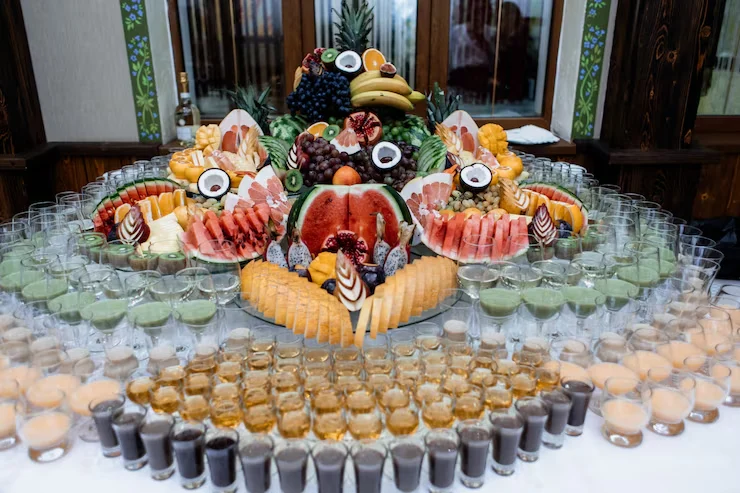
- Grazing tables remain one of the strongest catering trends, particularly at weddings and private parties. They create a visually striking centrepiece while offering variety for different dietary needs.
- Shared platters and family-style dining have risen in popularity, especially for informal events where interaction is encouraged.
- Caterers report that 48% of private event clients in 2024 requested at least one grazing or sharing feature.
Formal Dining with a Twist
While buffet and sharing formats dominate, formal dining hasn’t disappeared:
- Multi-course plated meals are still preferred for luxury weddings and gala dinners, particularly in London and Edinburgh.
- However, interactive touches are being added — such as live chef demonstrations, dessert stations, or wine-pairing courses.
- Deloitte’s 2024 hospitality survey noted that guests increasingly value theatrical elements, making dining both a meal and an experience.
Hybrid and Flexible Service
Cost pressures and guest diversity are pushing caterers towards hybrid service formats:
- Buffet + plated dessert models are common at corporate events to balance efficiency with a touch of formality.
- Street-food stalls indoors are becoming a staple for conferences and large gatherings, offering choice without slowing service.
- Outdoor events often combine casual food trucks with staffed drink stations, striking a balance between self-service and traditional hosting.
The common thread is flexibility — caterers are designing service formats that suit both guest expectations and event budgets.
Future Outlook for UK Event Catering 2025 and Beyond
The UK event catering sector is entering a period of steady but significant change. While growth is expected, the next few years will likely reshape how catering is planned, delivered, and valued at events.
Key Growth Drivers
Several factors will continue to shape catering preferences:
- Sustainability as standard: By 2026, analysts predict over 70% of UK events will require measurable sustainability reporting from caterers.
- Dietary inclusivity as baseline: Vegan, gluten-free, halal, and kosher options will no longer be add-ons but integrated into mainstream menus.
- Technology adoption: AI-driven planning, mobile ordering, and automation will become commonplace in both large and small events.
These drivers suggest a more professionalised, transparent, and guest-focused catering industry.
Challenges Ahead
Despite growth, challenges remain:
- Food price volatility and supply chain risks could still disrupt menu planning.
- Staffing shortages across UK hospitality mean caterers must balance service quality with rising wages.
- Regional disparities in event budgets may widen, with London and the South East continuing to outspend other regions.
The Long-Term Shift
By 2030, the catering market is expected to look markedly different:
- Plant-based menus could make up half of all offerings, particularly at weddings and corporate events.
- Alcohol-free beverages may outpace traditional spirits at certain event formats.
- Caterers may increasingly act as sustainability consultants, not just food providers, helping organisers meet environmental and social goals.
The future points to an industry that balances creativity with responsibility, adapting continuously to changing guest preferences and broader societal expectations.
Outlook on Event Catering Preferences in UK in 2025
Event catering in the UK has evolved into more than food service; it now represents sustainability, inclusivity, and guest experience. In 2025, the market continues to grow steadily, with weddings, corporate events, and festivals shaping demand. Menus reflect diverse dietary needs, regional traditions, and health-conscious choices, while beverages are expanding into alcohol-free and premium categories. Service formats are adapting too, with grazing tables, hybrid dining, and interactive catering experiences at the forefront.
Looking ahead, the UK catering industry will remain responsive to shifting guest expectations, economic pressures, and environmental priorities. By combining creativity with accountability, caterers are positioned to meet the needs of both organisers and guests, ensuring that events in 2025 and beyond feel memorable, inclusive, and socially responsible.
Why Choose Pearl Lemon Catering for Event Catering in the UK 2025
Pearl Lemon Catering stands at the forefront of UK event catering in 2025, combining seasonal menus, flexible service formats, and sustainable practices to meet today’s guest expectations. Whether you’re planning a wedding in London, a corporate event in Manchester, or a festival in Edinburgh, our team provides menus that reflect both local produce and global flavours.
Here’s why organisers trust Pearl Lemon Catering:
- Menu Variety: From plant-based banquets to halal, kosher, and allergen-aware menus, inclusivity is built into our service.
- Regional Expertise: We work with suppliers across the UK, offering local seafood in Cornwall, whisky pairings in Scotland, and vibrant street-food options in the Midlands.
- Sustainability Commitment: Our catering reduces waste through smart planning, eco-friendly packaging, and partnerships with local farms.
- Flexible Service Formats: Whether you want formal plated dining, casual grazing tables, or interactive food stations, we adapt to your event style and budget.
- Beverage Innovation: We offer alcohol-free cocktails, premium regional spirits, and on-trend drink stations to match your food service.
With Pearl Lemon Catering, every event is supported by expertise, attention to detail, and a genuine commitment to creating memorable experiences for guests.
FAQs
1. What are the main event catering preferences in the UK for 2025?
In 2025, UK catering focuses on sustainability, plant-based menus, alcohol-free beverages, and hybrid service styles. Guests expect inclusivity across vegan, halal, kosher, and allergen-friendly menus.
2. How much does event catering cost per guest in the UK in 2025?
Costs vary by event type: weddings average £95–£130 per guest, corporate events £70–£110, and festivals £20–£40. Location and menu complexity also influence pricing.
3. Are plant-based menus popular for UK event catering in 2025?
Yes, plant-based dining is mainstream. Around 35–40% of event menus now feature vegan or vegetarian options, reflecting rising flexitarian lifestyles.
4. How is sustainability influencing event catering in the UK?
Sustainability is now a top priority. Caterers use local sourcing, compostable packaging, and food redistribution partnerships. In 2025, over 60% of event planners in the UK prioritise eco-friendly catering.
5. What are the top beverage trends in UK event catering for 2025?
Alcohol-free cocktails, kombucha, and botanical sodas are growing, alongside premium regional spirits like Scottish whisky and Cornish gin. Interactive drink stations are also on the rise.
6. How does Pearl Lemon Catering support dietary inclusivity?
Pearl Lemon Catering provides vegan, halal, kosher, gluten-free, and allergen-aware menus. Our chefs design inclusive catering that ensures every guest feels accommodated.
7. What service styles are most popular for UK events in 2025?
Grazing tables, hybrid buffet-and-plated formats, and interactive food stations are trending. Formal multi-course dining remains strong for luxury weddings and gala dinners.
8. Does Pearl Lemon Catering offer regional menu options across the UK?
Yes, we work with local suppliers to highlight regional flavours — from seafood in Cornwall to whisky in Scotland and South Asian fusion menus in Birmingham and Manchester.
9. How do rising food costs affect event catering budgets in 2025?
Food inflation remains a challenge, but caterers adapt through seasonal menus and flexible pricing. Pearl Lemon Catering helps clients balance quality and budget with smart menu planning.
10. Why choose Pearl Lemon Catering for UK event catering in 2025?
Because we combine inclusivity, sustainability, and flexible service formats with a nationwide reach, delivering catering that reflects both modern UK preferences and regional traditions.